Showing posts with label new york city. Show all posts

Monday, May 2, 2016

Singapore's supertrees

Last week Philadelphia's city council introduced resolutions calling for the expansion of urban and vertical farming. What that means is still unclear, does anyone know what happens next in this process?

The grand opening of Europe's largest urban farm, capable of churning out 45 tons of vegetables and 19 tons of fish, May 20. The founding company is expanding to the US, they hope to open 10 sites in the New York Tri-State area. 2016 will be an interesting year rooftop farming!

-The USDA announced a urban agriculture toolkit for aspiring urban farmers. Wow!

-A $6.5 million dollar private-public partnership in New Mexico will create 14 permanent jobs and another 35 construction jobs to build an urban aquaponic system capable of feeding 16,000 people. And the micro-algae which grows as well will be supplied to another company to produce omega-3 nutritional supplements!

-Hamilton, Ontario's first legal marijuana production facility is capable of producing 2,700 kilograms per year.  And because it's marijuana, they have bank level security.

-This is really fantastic. Vacant lots in Germany are being turned into public gardens and I mean truly public. Anyone can, even tourists, can pick a tomato or two.

-Did you know in the UK sustainable drainage systems (like water retention ponds, green roofs, permeable paving) for all new developments is now the rule? Perhaps we should look to places like Singapore for the next wave in water usage. Faced with tremendous constraints, they have innovated unlike any other place. Two desaslination plants produce a quarter of the city's needs. And wastewater is being reused in all sorts of fantastic ways. Check out these super trees:


Sunday, January 17, 2016

Community gardens raise property values


Wisconsin has been at the leading edge of the aquaponics movement for quite some time and their state's resume keeps getting more accomplished. The Aquaponics Innovation Center, is not even a year old, but they've received almost 3/4 of a million dollars to study aquaponic systems. 

-Ohio doesn't have the resume, Canton is hoping to change that. They have a $150 million dollar agri-business energy project design to bring 1,300, some of those in the aquaponics field.

-Over 1 million trees have been planted in New York City, more than any other city in the world. Here's how they did it.

-I haven't seen many articles of this type, but this landscape architect is wondering whether we need to start favoring xeriscapes and the "beauty of drought", or at least less water dependent creations, if landscape architecture is going to reflect the realities of a future, thirsty world.

-A fully automated growing system has just hit the market, on the low end the farm cube takes only 6 weeks to grow 200 pieces of your favorite vegetable.

-The UK has a brand new pop-up cafe, called Stroud Food Surplus Cafe, which sells "surplus food", food from restaurants that's perfectly fine, just past the expiration date.

-Two important studies came out last one. One quantifies how much land would be needed to feed Seattle, a city of about 650,000 people, 58 kilometers. Urban food crops, at the maximum, could fill 4% of the city's food needs.If you've been following the blog you know feelings towards community gardens have been changing, positively, over the last few years. Some towns/cities are still a bit reluctant. That should change with the first report indicating neighboring property values rise by as much as 9.4% points within five years of a garden's opening and the gardens can lead to increases in tax revenues of about half a million dollars per garden over 20 years.

Monday, February 2, 2015

2015 Midwest Urban Farmers Summit at the Plant, March 14-15

Toronto, or better yet the Greater Toronto Area, has it's largest aquaponics operation to date based in Mississauga.

-New York City hopes to develop over a dozen vacant lots to make more community gardens available across the city. DC wants twice that number and wants an "army of urban growers".

-Chicago is holding it's 2015 Midwest Urban Farmers Summit at the Plant, March 14-15. They are still taking presentation proposals and requests.

-Most of the time when people think about horticultural therapy, they think about the numerous benefits to seniors or veterans. But everyone can benefit, especially kids.

Monday, December 29, 2014

Public parks with private poppy

As you know New York's Highline was the catalyst behind big changes on the westside of Manhattan. More changes are coming down the pike with a new park. But is that a good thing? Sponsored by private money, what is private wealth's role in remaking public spaces?

-This fall was the first time MillionTreesNYC free tree giveaway featured exclusively edible fruit trees, in total 4,500 were claimed!

-Since the spring residents of a retirement facility, just outside of Chicago, have grown vegetables on their rooftop hydroponic facility for use in their kitchen and others kitchens across the city. This is the first of it's kind, I believe.

-If you'd like to peer into the life of one horticultural therapist practicing in New Jersey, check out this blog. I've linked to the latest posting in the past, she periodically updates it with interesting anecdotes.

-An Emory College student has launced a vineyard to study the American starvine, a threatened native plant which may have tremendous medicinal benefits.

-Earlier in the year I wrote about Brightfarms opening a urban farm in DC, it will be one of the biggest in the USA. Make that, it would have been. The site is so contaminated, they make walk away from the project and $700,000 already invested. A recent paper highlighted the problem in Buffalo and New York City.

Friday, July 18, 2014

Gila words of the week: Urban Fruit Trail & Underground Rooftop Garden

Ahhh...I know I have your attention now! We're going to end the week on a very, very high note.

-What is an underground rooftop garden you ask? Have a look...


Art students from Savannah, Georgia are exploring what it is like to live in a micro house. Their choice of pop-up locations with all of the amenities...the campus parking garage. Have a look.
Their ephemeral pad even includes container gardens.

-There's a bit of flexing underway in Vancouver as Canadian Pacific Railways is looking to once again use railway lines last touched 13 years ago. This could mean the destruction of 10% of Vancouver's urban gardens, many surround the formerly defunct line. The City of Vancouver is pushing back...just a touch. And of course community gardeners are not that pleased. This could take a while to play out, let's see what happens.

-Historically why have landscape architects resisted designing productive landscapes? One blogger  believes it has to do with Management, Liability and Aesthetics. Hey, wait a second, that would spell MLA...the acronym for Master of Landscape Architecture. Weird!!!

-A scaled down, more structured artistic spin of a food forest is being planned in Los Angeles. They have coined it the urban fruit trail.

-Rooftop gardens have been part of the New York landscape since the early 1880s. Take a trip back in time to find out why they became all the rage.

-Charleston, South Carolina and Waltham, Massachusetts are planning huge eco-districts. Waltham is setting aside $20 million dollars for a 58 acre agriculture and community farming hub. Charleston is designating 865 acres (!) as an eco-district, unfortunately what that means is unclear. Eco measures, including green roofs, seem to be "voluntary". Let's hope for the best!

-And last but not least for the week. Plants can hear, according to researchers from the University of Missouri. Yes, you heard that right.

Wednesday, July 2, 2014

Don't put crocodiles in your rooftop garden!

It's wonderful when public officials just "Get It!" The mayor of Montreal seems to be one of them, when it comes to urban agriculture. He's encouraging Montrealers to grow food in public spaces and relaxing zoning laws to allow more commercial and residential urban agriculture, in addition to giving them the right to sell to grocery stores or sell on their farms!

-There were a couple of articles about a living wall in California which had failed and is now a communal eyesore. I wanted to see what kind of living wall this was, it seems to be more of a vegetated sound barrier than a "living wall", in my view. What do you think?


-A new title holder for the world's largest vertical garden/living wall has been crowned.

-Check out this handy garden sensor which can relay real-time data about the status of your garden and if you like the idea, support them on Kickstarter.

-We need a 596 acres-esque company in every city! By piecing together every master plan in New York City history they have found sites that were planned open spaces that were behind fences and opened them for public use and helped residents understand why things look the way they do.

-Lastly to follow up on Monday's post about rooftop terraculture, if you're going to do it, make sure to stock your rooftop pool with easy to handle animals. So that would eliminate crocodiles!


Thursday, March 27, 2014

Philly official wants a green roof tax credit

Although the New York City green roof tax abatement deadline for 2014 ,just passed on March 15, beginning July 1, 2014 the per project allotment has doubled from $100,000 to $200,000 and one can receive $5.23 per square foot, up from the already generous $4.50.

-State Rep. Brian Sims, D-Philadelphia introduced several bills designed to stimulate green job growth. Of particular note is his proposed Green Roof Tax Credit, available to all sectors with at least four layers (waterproof membrane, drainage, medium and plants). The tax credit would be up to 25% of total cost incurred. The tax credit will not exceed $10 million per year.

-In Australia horticultural researchers from the University of Melbourne have released a new study in the Journal of Plant and Soil detailing some fantastic native green roof plants. The lead researcher, Dr. Claire Farrell, is a true superstar. You can see some of the other papers she has published over the last couple of years.
Speaking of Melbourne, I forgot to throw up a link to Melbourne and Victoria new green roof, wall and fascades guide released last month.

-I'll wind up with some green (living) wall information. London is hosting a green walls forum in mid-April. Mayor Boris Johnson has a target of 5% coverage (in central London) by 2030 and this conference (one of the first in the world) confirms his support. It seems like a collegial gathering, focused on information sharing the latest academic research, systems and life cycle analysis.

Thursday, August 22, 2013

Two urban agriculture firsts for new york city + Urban horticulture around the world

It's been a while since we did a global urban agriculture crawl...First up is Morocco.

Future Megacities - Urban Agriculture in Casablanca, Morocco from crossdocs on Vimeo.


Next is Lima, Peru where city officials are betting on urban agriculture to help stem malnourition and poverty.

Last up is Bangalore, India. This article has two amazing things going for it: It briefly details urban agriculture in Bangalore and introduces us (or at least me) to a much richer way to describe "urban agriculture". I'll have to start using terms like "urban horticulture" and "terrace gardening" more often. Secondly, look at that picture!

-I am always on the look out for the project which can be crowned the biggest, best or first green roof or biggest green wall. The title of first rooftop farm on a housing project goes to New York City.
How about the oldest rooftop farm? For now the title stay in New York City as well!

Thursday, August 15, 2013

Could green infrastructure solve problems...and create some too?

Wow, the last couple of weeks has served up some really tasty articles from the GILA world.
A few of the articles are of the “now that you mention it, that makes sense” variety.

A piece from Grist summarizes some interesting research, the bottom line being those who live in poor neighbourhoods are more likely to experience the phenomenon known as “heat islands”.
And because people of colour are disproportionally poor, there is a racial component as well. Green infrastructure/living architecture could help alleviate this, of course, but if municipalities aren’t investing in GILA, it may be up to individuals to lead the charge of cooling their neighbourhoods, one home at a time.

But we shouldn’t just assume having a ton of trees, green roofs or any green infrastructure will fix the problem...they could actually make more! I had no idea how virulent some soil borne fungal diseases can be. This leads me to think soil scientists should be more involved in designing soil mixes for any urban soil installation!

-If you’ve been watching the web, no doubt you have seen that some cities (spearheaded by individual residents and city officials) are moving forward with and strongly supporting urban agriculture. For instance, Indianapolis (yes, Indianapolis) an urban agriculture store opens soon. And Denver has a developer offering urban gardens when you purchase a unit.  Some cities, like LA, seem to be a bit more inconsistent. What is absolutely clear is that even cities, like New York and Vancouver, with progressive urban agriculture agendas passed by city councils, if money and land are the bottom lines, there will be a tug of war. 

-The last story for sharing today features the San Francisco Giants turning some concrete at the ballpark into an organic vegetable garden. One minor quibble. The article calls the project “ambitious”. I don’t have all the figures, but I tend to think if you have a payroll of over $136 million dollars, you have money to burn and it won’t be that hard to get done.

Thursday, June 20, 2013

Friends of urban agriculture take on wildflowers and transit

This may go down as the week friends of urban agriculture took on all comers. Wildflower fans maintain that there shouldn't be fruit orchards, transit advocates saying there should be no urban agriculture at all! But maybe there is space for growing flowers in the city?

-If you're in the green roofing business I would like to direct your attention to the ultimate guide demonstrating how green infrastructure (like green roofs) can overcome the urban heat island effect. These kids in New York City are already firmly on board, they've started a petition to hopefully have green roofs installed on all NYC schools! Here's the petition if you want to go straight to it.

-Lastly here's a couple of GILA (green infrastructure, living architecture) stories from some lightly reported places: Thailand, Nepal and China.

Monday, May 27, 2013

Green roofs, now better than ever!

If you’re a fan of green roofs no doubt you read the Scientific American article a couple of weeks ago which set off a mini-firestorm in the green roof and broader green infrastructure world. I won’t direct you to all of the sites which reprinted and summarized the article, but they appeared on websites with large followings and active communities (check the comments section of some of those sites!)

Before diving into the comments, let’s take a look at the actual article. As we all know headlines are meant to capture readers and this one certainly did that. The problem seems to be green roofs in America’s biggest, most iconic city are essentially broken, but fixable.  In particular the author asserts that they have not fared well in reducing urban heat island and energy usage. That is definitely debatable, as there are several studies which show green roofs can help with both. However, the article offers no evidence for this assertion and actually spends most of its space concerned with another issue, how green roofs planted with primarily sedum species plants do not perform well in regards to stormwater management.

We should take a step back even further and look at the original statement that green roofs are not working because not everyone gets a green roof for the same reason. With over twelve different green roof benefits there are a lots of reasons to get one and yours may be performing exactly as you expected it to. Especially if you bought one to reduce your long term roof replacement costs. Or if you bought one for aesthetics..and year after year it looks amazing!

But one to the stormwater management assertion...

Before reading Scott MacIvor’s work it has been verticiel’s aim to install a range of plants, not solely sedum species, on it's projects. Several grasses can work in 4-6 inches of medium and not a green roof is designed these days without our green roof champs chives and oregano. If you can have a rooftop you can eat from, why not? That's our philosophy, design a roof which provides as many benefits as possible. However we should all be thankful that he is pushing the industry forward and finding out what is best for the environment, even if your practice was to simply install or recommend sedum species plants.

Reading the comments sections I think some people took offense to how he described sedum species plants as “Just being there.” Years ago when I first started in the industry I was surprised at how passionately people felt about certain kinds of plants. Most feel indifferent about plants. Some people LOVE sedum species plants and I have met some who absolutely despise them! To those who abhor sedum species plants, this article means less of them around. And they couldn't be happier.
And to those who love native plants, having someone speak out against plants commonly found in Asia and Europe on North American rooftops, is a cause for a party and gives ammunition to their passionate argument.

Parsing the comment sections further one can plainly see other underlying sentiments. There are those (green roof designers, installers, growers) who have staked their whole business on sedum species plants, Amy Kraft’s article could be one which easily causes their businesses to tailspin...and quickly. And so they react passionately.
I imagine there are other green roof supporters who fear green roofs have plenty of detractors already and now those opponents have even more ammunition against a truly wonderful technology.

But I fear not and neither should you. This article gives us more to discuss. And finding ways to make green roofs better benefits us all, and for that we should be very appreciative!

Friday, May 24, 2013

Green roofs not working in NYC?

A few quick hits...

Aquaponics is a fantastic idea, especially in areas around the world without access to the ocean. In Gaza city the UN’s Food and Agriculture Organisation (FAO) has set up 15 aquaponic urban farms to lessen food insecurity. Good to know the program has expanded.

-As for this article about Manhattan’s Green Roofs "not working"...well, I will tackle that on Monday, but you should have a gander today if you haven't seen it already!


Monday, May 13, 2013

Green roof industry grows by 24% in 2012

Hot off the presses, according to green roof and green wall advocacy group, Green Roofs For Healthy Cities, the green roof industry grew by approximately 24% in 2012. Not as much as previous years, but growth in the industry means more green roofs...and that's a great thing for everyone.

-Horticultural therapy internship opportunities don't come around often, so when the opportunity arises you have to jump on them FAST! After your internship is done, who knows, you may be the next to create an award winning program like Horticulture for People with Disabilities in New Jersey have.

-I don't mean to make this post focused on metro New York, but one last thing. The green roof property tax abatement has run out, but City Council is investigating whether to renew it or offer something bigger and better.

-NY and Philly have had a friendly rivalry for a while, add the Green Angel Fund, an urban agriculture focused competition between two high schools, to the mix.

-The last two years have brought several insightful articles (exposés???) about Milwaukee's Sweet Water Organics, the pioneering aquaponics company. Unfortunately, it looks like they have closed up shop. It will be interesting who ends up taking control of their equipment and what sort of operation will rise from the rubble.

-Apps for urban agriculture have definitely picked up steam in the last six months.  Michigan State University Extension has been very kind to do a roundup of the very best, including those which can help you determine weeds, insects, and soil characteristics.

Sunday, November 4, 2012

Mayor Bloomberg loves green roofs so much, he’s helping Pittsburgh!!!

Mayor Michael Bloomberg has been a terrific proponent of green infrastructure for New York City. But he can't make other cities put green roofs up. So his foundation is taking the next step by giving the city of Pittsburgh $100,000 for cool or green roofs.

-How can someone get a job in the permaculture field? Whenever someone asks me that question, I can now direct them to this handy guide from the Austin Permaculture Guild.  One suggestion from the permaculture job guide is to join an existing project as an intern. Wouldn’t you know it, there’s an opportunity in New Hampshire right now.

-Two new GILA projects have hit the web, notable for their locations. One is a small vertical farm in Arizona, the other...errm...underground. Where? Anywhere!

-Co.Exist is rapidly becoming one of my favorite websites. Where else can you read about turning firehydrants into bioswales?

-Lastly I must, absolutely must, direct you to see this person's Halloween costume...she's dressed as a green roof!

Wednesday, September 19, 2012

Can a mighty green roof be your city's silver bullet solution?

The Highline, everyone's favorite green infrastructure project, has done big things for New York City. Nearly every week I read an article analyzing how transformational it really is and the many ways to view its success.  This particular author proclaims that it's a poster child for adaptive reuse, and gives us a few other iconic projects.
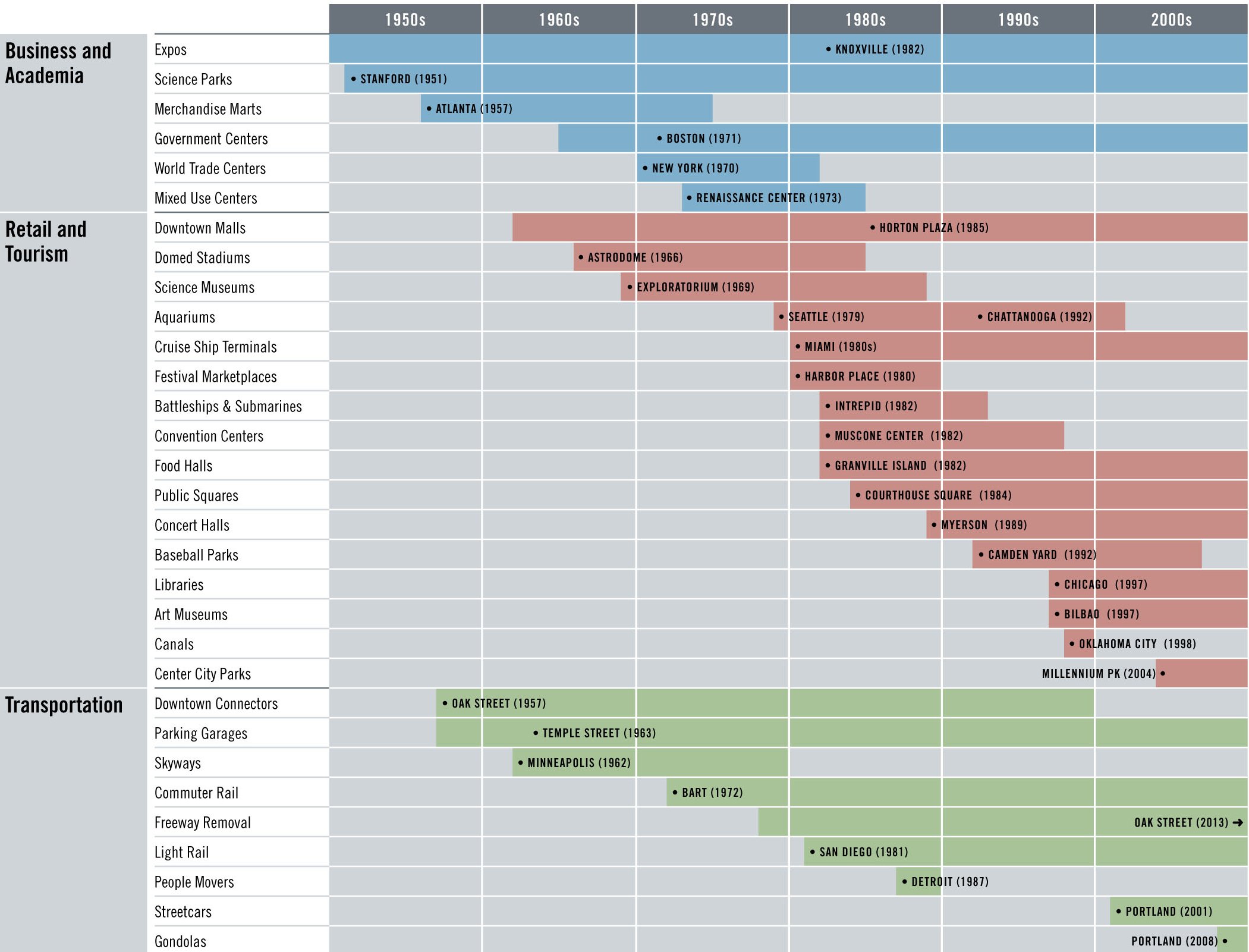
Rod Stevens wrote a piece last year about "silver bullet solutions" for municipal redevelopment and revitalization; it was one of my favorite articles of the year and features my favorite graphic as well. We need an updated graphic and "Building a Highline" added to the #32 slot. Well, maybe #35 (downtown pedestrian malls and downtown areas were added by some readers after the original article). In colorful detail the graphic boils down all the things cities have tried. I always forget to share this, enjoy!


Friday, September 14, 2012

Green (and blue) jobs from green infrastructure

If you haven't seen Steve Ritz, you need to. A great example of how one teacher inspires thousands of kids and changes even more lives, with green infrastructure.


North America's crumbling infrastructure, yes, it's a verry bad thing. But Jeremy Hays opens our eyes to how many jobs and how much economic activity there is to gain by making our water systems reliable and safe by employing a variety of solutions, including green roofs.

Wednesday, September 12, 2012

Using green roofs as "polish" + a reintroduction to freeganism

Over the past couple of months I have talked a bit about New York's Highline. This tidbit from the summer fell through the cracks, Jersey City, New Jersey would like a Highlinesque park as well.

We must keep our eye on another developing story here, how parks (and publicly funded green infrastructure) become an unwitting catalyst to "polish" (to use the author's words) the surrounding vicinity.

-It's been a while since I posted anything on the freeganism. Five years ago I would have put this on my burgeoning trends list, but it hasn't caught on. For those new to the idea Utne (via Gastronomica) reintroduces us to the idea.

The article references a Seinfeld episode, but doesn't give the clip. We must rectify this!


Wednesday, August 29, 2012

A few (green roof) things


The green roof industry is just a few decades old, as such there is still a lot of research to be done. Vital questions are being investigated at Columbia University such as how do birds use green roofs and which insects can you find?


-In some great green roof news, Nashville, Tennessee's city council is debating a green roof incentive program which would give residents $10 a square foot credit on their water and sewage bills for up to 60 months. The city has allocated $500,000 for the program, which is pretty good considering Nashville's population is about 600,000.

-Sunday I was at the Canadian National Exhibit in Toronto. In its 10th decade, this year attendees can feast their eyes on a green roof exhibit (in the Heritage Court, near the south entrance to the Ricoh Centre). Designed by Janet Ennamorato of Creative Garden Designs, I was on hand to spread the word. If you want to check it out, there are a few days left. If you can't make it, here are a few pics:


-The final item for today is an update on the raccoon issue. This stuff below we have used for a couple of weeks now. The plants seem to be okay with these pepper based product and it seems the raccoons have a new lavatory!


Ridder indeed!!!

Friday, July 13, 2012

Green roofs, a symbol of bad or good architecture + breathless in France over urban ag


A ton happening on the urban agriculture front around the world:
-Urban ag enthusiasts in Vermont have another week to voice their opinion on the recommendations made by Burlington's Urban Agriculture Task Force. A stone’s throw away, Somerville Massachusetts is encouraging its residents to grow by planting an urban garden at its city hall. 
-In France, they are just beginning to investigate this thing called “urban agriculture” and the author of this article seems amazed by it all. It made me chuckle at first, but when I step back for a moment and think about it, it is pretty amazing. Maybe 10 years ago the nutty neighbors were the ones growing vegetables, these days its less and less likely that your neighbors would label you so and in places where urban gardens were slashed and burned, they are now less often targeted.  
-How a week can change things! Green roofs on this New York City building go from being possibly good to very bad when community groups take a look at some renderings. 
-Last month the National Resources Defense Council released a paper detailing how California could reduce its energy expenditure with green and white roofs. Sorry for not posting that sooner, it has been waiting in the queue! 

Tuesday, June 19, 2012

The Times is busy with bees


-The New York Times has had a bunch of articles in the last two months about bees. From exploring the proliferation of bees and bee lovers, to reports on bees creating various forms of trouble.  Someone at the Times is definitely smitten
-I neglected to update everyone on the completion of the green roof debate in Toronto City Hall last month. On May 8-9, 2012 all three motions recommended for adoption by the Planning and Growth Management Committee were adopted. The big one is the establishment of a discretionary reserve fund called the 'Eco-Roof Financial Assistance Reserve Fund' to subsidize green roof installation for all industrial, commercial and institutional buildings.
-I love the fact that the Salvation Army has launched this program in Montana to help kids learn to farm, eat and sell their vegetables. If an organization like the Salvation Army can do it there, they could easily replicate the program wherever they have branches...which is practically everywhere!