The biggest story of the past two weeks details the world's biggest aerogation project to date. When installed in 2017, this 4 square meter living wall system in London will be able to purifying 2 million liters of air every day!
-If you read nothing else, check out this story on CHIRPS (Climate Hazards Group InfraRed Precipitation With Station data). By managing food use and distribution better, we could reduce 14% of emission produced by agriculture in 2050. It blends data from weather stations and satellites, from the past three decades, to hopefully give farmers an idea of how the current growing season might look. An early warning system, so to speak.
-Add Jackson, Mississippi to the list of communities with food forests!
-Another fantastic story, this time from Indiana, about how aquaponics is helping employ those with social needs and give back to the community.
-Tucson, Arizona has been named a City of Gastronomy in the Creative Cities Network
by UNESCO. It's the first American or Canadian city to get this award and joins a list of 116 cities in 54 countries. Fun fact, Tucson has had urban agriculture, in some form, for over 4,100 years!!!
-Frustrating news for urban agriculturists from Moscow, because the 150 year old Timiryazev Agricultural Academy, will be moved and the 100 hectares of land used constantly for education and experimentation at the agrarian university will now become residential buildings. Some experiments have been ongoing for over a century!
Showing posts with label arizona. Show all posts
Showing posts with label arizona. Show all posts
Monday, April 18, 2016


Friday, February 19, 2016
Two more colleges offer urban agriculture degrees
Tuesday, December 29, 2015
Solutions for Change takes aquaponics higher
San Diego's largest aquaponics farm will triple its size, making it one of the largest in the country. This is a tremendous success story for the industry and Solutions for Change.
-This was a good week for green jobs, as another innovative green jobs training program pairs New York residents in public housing developments to work on environmental sustainability and energy efficiency programs.
-Mesa Community College continues to revolutionize as they now offer an Associate of Applied Science Degree in Sustainable Agriculture, the first of it's kind in Arizona and really one of the first nationwide.
-This isn't really about sustainable agriculture, living architecture or green architecture, but is still amazing all the same. Look at the many ways the Colorado River effects the American West.
-The City of Halifax has released a handbook for community gardening on municipal lands. Very handy!
-Let's finish up with the best stuff last. The rising popularity of Freight Farms container gardening system makes me wonder if one day we'll see these systems for community (by block...neighborhood?) food security.
-This was a good week for green jobs, as another innovative green jobs training program pairs New York residents in public housing developments to work on environmental sustainability and energy efficiency programs.
-Mesa Community College continues to revolutionize as they now offer an Associate of Applied Science Degree in Sustainable Agriculture, the first of it's kind in Arizona and really one of the first nationwide.
-This isn't really about sustainable agriculture, living architecture or green architecture, but is still amazing all the same. Look at the many ways the Colorado River effects the American West.
-The City of Halifax has released a handbook for community gardening on municipal lands. Very handy!
-Let's finish up with the best stuff last. The rising popularity of Freight Farms container gardening system makes me wonder if one day we'll see these systems for community (by block...neighborhood?) food security.
Wednesday, August 27, 2014
GILA word of the week: Heirloom aquaponics
It's been difficult for people and organizations to make money with aquaponics, like any urban agriculture endeavor. Case in point, an innovative aquaponics project in the UK was recently scuttled because they wanted (or needed?) to build a wood
chipping and log drying plant as well.
But I think the key may be the same for microfarmers, whether they are urban or rural: high end products. If you could charge a premium for special kinds of shrimp or indigenous veggies (like "slow-bolt" cilantro, Yoeme basil) profitability may be possible.
If you'd like to give the shrimp a try yourself, here's a primer below:
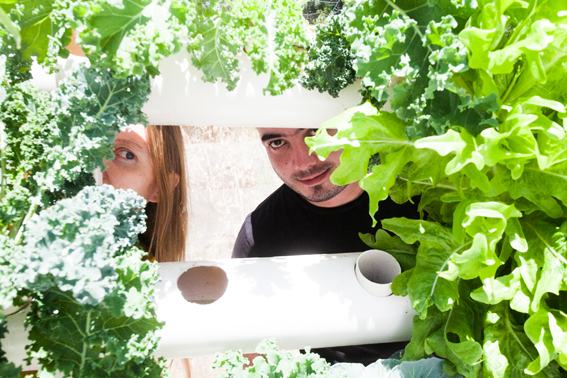
The fighting in Gaza has forced farmers and herders to abandon their lands and has paralysed fishing activities, bringing local food production to a halt and severely affecting livelihoods, the United Nation’s FAO warned last week.
Recovery in the agriculture sector, once hostilities cease, will require significant external assistance over the long term. And this is where we see opportunities for alternative agriculture systems for smallholder farmers and families. Aquaponics and hydroponics can be done on rooftops, and it is especially meaningful in areas where water is severely limited.
The FAO estimates that the recent fighting has resulted in substantial direct damage to Gaza’s 17,000 hectares of croplands as well as much of its agricultural infrastructure, including greenhouses, irrigation systems, animal farms, fodder stocks and fishing boats.
According to the latest update Gaza has lost half of its population of poultry birds (broilers and layers) either due to direct hits on their shelters or lack of water, feed or care resulting from access restrictions.
Around 64,000 head of small ruminants are in need of animal feed and water in order to avoid further animal deaths and the additional erosion of herders’ productive assets.
Meanwhile losses by Gaza’s fishing sector so far are estimated at 234.6 tonnes over the period 9 July – 10 August –equivalent to 9.3 percent of local fishers’ yearly catch.
“Up to now, ongoing military operations have prevented detailed assessments of damages to agriculture from being completed,” said Ciro Fiorillo, head of FAO’s office in the West Bank and Gaza Strip.
The Gaza Strip imports most of what it eats — however locally produced food represents an important source of nutritious and affordable food, and some 28,600 people in Gaza rely on farming (19,000 people), livestock raising (6,000) and fishing (3,600) for their livelihoods.
“Under the most recent ceasefire many farmers and herders are now able to access their lands, however resumption of food production faces serious obstacles given the damages sustained and shortages of water, electricity, inputs and financial resources, as well as ongoing uncertainty regarding the possible resumption of military activities”, said Fiorillo.
Volatile food prices
- See more at:
http://www.greenprophet.com/2014/08/why-gaza-needs-hydroponics-and-aquaponics-for-food-security/#sthash.AxVZJuRZ.dpuf
The fighting in Gaza has forced farmers and herders to abandon their lands and has paralysed fishing activities, bringing local food production to a halt and severely affecting livelihoods, the United Nation’s FAO warned last week.
Recovery in the agriculture sector, once hostilities cease, will require significant external assistance over the long term. And this is where we see opportunities for alternative agriculture systems for smallholder farmers and families. Aquaponics and hydroponics can be done on rooftops, and it is especially meaningful in areas where water is severely limited.
The FAO estimates that the recent fighting has resulted in substantial direct damage to Gaza’s 17,000 hectares of croplands as well as much of its agricultural infrastructure, including greenhouses, irrigation systems, animal farms, fodder stocks and fishing boats.
According to the latest update Gaza has lost half of its population of poultry birds (broilers and layers) either due to direct hits on their shelters or lack of water, feed or care resulting from access restrictions.
Around 64,000 head of small ruminants are in need of animal feed and water in order to avoid further animal deaths and the additional erosion of herders’ productive assets.
Meanwhile losses by Gaza’s fishing sector so far are estimated at 234.6 tonnes over the period 9 July – 10 August –equivalent to 9.3 percent of local fishers’ yearly catch.
“Up to now, ongoing military operations have prevented detailed assessments of damages to agriculture from being completed,” said Ciro Fiorillo, head of FAO’s office in the West Bank and Gaza Strip.
The Gaza Strip imports most of what it eats — however locally produced food represents an important source of nutritious and affordable food, and some 28,600 people in Gaza rely on farming (19,000 people), livestock raising (6,000) and fishing (3,600) for their livelihoods.
“Under the most recent ceasefire many farmers and herders are now able to access their lands, however resumption of food production faces serious obstacles given the damages sustained and shortages of water, electricity, inputs and financial resources, as well as ongoing uncertainty regarding the possible resumption of military activities”, said Fiorillo.
- See more at: http://www.greenprophet.com/2014/08/why-gaza-needs-hydroponics-and-aquaponics-for-food-security/#sthash.AxVZJuRZ.dpuf
But I think the key may be the same for microfarmers, whether they are urban or rural: high end products. If you could charge a premium for special kinds of shrimp or indigenous veggies (like "slow-bolt" cilantro, Yoeme basil) profitability may be possible.
If you'd like to give the shrimp a try yourself, here's a primer below:
Why Gaza needs hydroponics and aquaponics for food security
The fighting in Gaza has forced farmers and herders to abandon their lands and has paralysed fishing activities, bringing local food production to a halt and severely affecting livelihoods, the United Nation’s FAO warned last week.
Recovery in the agriculture sector, once hostilities cease, will require significant external assistance over the long term. And this is where we see opportunities for alternative agriculture systems for smallholder farmers and families. Aquaponics and hydroponics can be done on rooftops, and it is especially meaningful in areas where water is severely limited.
The FAO estimates that the recent fighting has resulted in substantial direct damage to Gaza’s 17,000 hectares of croplands as well as much of its agricultural infrastructure, including greenhouses, irrigation systems, animal farms, fodder stocks and fishing boats.
According to the latest update Gaza has lost half of its population of poultry birds (broilers and layers) either due to direct hits on their shelters or lack of water, feed or care resulting from access restrictions.
Around 64,000 head of small ruminants are in need of animal feed and water in order to avoid further animal deaths and the additional erosion of herders’ productive assets.
Meanwhile losses by Gaza’s fishing sector so far are estimated at 234.6 tonnes over the period 9 July – 10 August –equivalent to 9.3 percent of local fishers’ yearly catch.
“Up to now, ongoing military operations have prevented detailed assessments of damages to agriculture from being completed,” said Ciro Fiorillo, head of FAO’s office in the West Bank and Gaza Strip.
The Gaza Strip imports most of what it eats — however locally produced food represents an important source of nutritious and affordable food, and some 28,600 people in Gaza rely on farming (19,000 people), livestock raising (6,000) and fishing (3,600) for their livelihoods.
“Under the most recent ceasefire many farmers and herders are now able to access their lands, however resumption of food production faces serious obstacles given the damages sustained and shortages of water, electricity, inputs and financial resources, as well as ongoing uncertainty regarding the possible resumption of military activities”, said Fiorillo.
Volatile food prices
The fighting in Gaza has forced farmers and herders to abandon their lands and has paralysed fishing activities, bringing local food production to a halt and severely affecting livelihoods, the United Nation’s FAO warned last week.
Recovery in the agriculture sector, once hostilities cease, will require significant external assistance over the long term. And this is where we see opportunities for alternative agriculture systems for smallholder farmers and families. Aquaponics and hydroponics can be done on rooftops, and it is especially meaningful in areas where water is severely limited.
The FAO estimates that the recent fighting has resulted in substantial direct damage to Gaza’s 17,000 hectares of croplands as well as much of its agricultural infrastructure, including greenhouses, irrigation systems, animal farms, fodder stocks and fishing boats.
According to the latest update Gaza has lost half of its population of poultry birds (broilers and layers) either due to direct hits on their shelters or lack of water, feed or care resulting from access restrictions.
Around 64,000 head of small ruminants are in need of animal feed and water in order to avoid further animal deaths and the additional erosion of herders’ productive assets.
Meanwhile losses by Gaza’s fishing sector so far are estimated at 234.6 tonnes over the period 9 July – 10 August –equivalent to 9.3 percent of local fishers’ yearly catch.
“Up to now, ongoing military operations have prevented detailed assessments of damages to agriculture from being completed,” said Ciro Fiorillo, head of FAO’s office in the West Bank and Gaza Strip.
The Gaza Strip imports most of what it eats — however locally produced food represents an important source of nutritious and affordable food, and some 28,600 people in Gaza rely on farming (19,000 people), livestock raising (6,000) and fishing (3,600) for their livelihoods.
“Under the most recent ceasefire many farmers and herders are now able to access their lands, however resumption of food production faces serious obstacles given the damages sustained and shortages of water, electricity, inputs and financial resources, as well as ongoing uncertainty regarding the possible resumption of military activities”, said Fiorillo.
- See more at: http://www.greenprophet.com/2014/08/why-gaza-needs-hydroponics-and-aquaponics-for-food-security/#sthash.AxVZJuRZ.dpuf
Thursday, September 19, 2013
Aquaponics conference starts tomorrow September 20!
A quick hit, before I forget.
Daily temperatures are up and down and the leaves are beginning to change. If you'd like to catch a few more rays as fall descends across North America head to Tuscon for the 2013 Aquaponics Association Conference which starts tomorrow. It coincides nicely with the opening of the world's largest aquaponics store and education center in Colorado.
Daily temperatures are up and down and the leaves are beginning to change. If you'd like to catch a few more rays as fall descends across North America head to Tuscon for the 2013 Aquaponics Association Conference which starts tomorrow. It coincides nicely with the opening of the world's largest aquaponics store and education center in Colorado.
Sunday, November 4, 2012
Mayor Bloomberg loves green roofs so much, he’s helping Pittsburgh!!!
Mayor Michael Bloomberg has been a terrific proponent of green infrastructure for New York City. But he can't make other cities put green roofs up. So his foundation is taking the next step by giving the city of Pittsburgh $100,000 for cool or green roofs.
-How can someone get a job in the permaculture field? Whenever someone asks me that question, I can now direct them to this handy guide from the Austin Permaculture Guild. One suggestion from the permaculture job guide is to join an existing project as an intern. Wouldn’t you know it, there’s an opportunity in New Hampshire right now.
-Two new GILA projects have hit the web, notable for their locations. One is a small vertical farm in Arizona, the other...errm...underground. Where? Anywhere!
-Co.Exist is rapidly becoming one of my favorite websites. Where else can you read about turning firehydrants into bioswales?
-Lastly I must, absolutely must, direct you to see this person's Halloween costume...she's dressed as a green roof!
-How can someone get a job in the permaculture field? Whenever someone asks me that question, I can now direct them to this handy guide from the Austin Permaculture Guild. One suggestion from the permaculture job guide is to join an existing project as an intern. Wouldn’t you know it, there’s an opportunity in New Hampshire right now.
-Two new GILA projects have hit the web, notable for their locations. One is a small vertical farm in Arizona, the other...errm...underground. Where? Anywhere!
-Co.Exist is rapidly becoming one of my favorite websites. Where else can you read about turning firehydrants into bioswales?
-Lastly I must, absolutely must, direct you to see this person's Halloween costume...she's dressed as a green roof!
Tuesday, January 31, 2012
Green roofs at the Biosphere
-Way back when (over 10 years ago) I had an internship at Biosphere 2. It was a fantastic experience that influenced my career path and ambitions more than anything to date. So imagine my delight to learn about their current green roof research. In the industry, there is a dearth of information concerning appropriate materials and assemblies in arid green roof environments and Arizona is the perfect place to do research!
-What will be eating in 2050? If I were a betting man, I would double down on "micro-farming". Relatively low tech and inexpensive as well, I hope Western taste buds will be up for the challenge?
-Seton Hall University has started it's own permaculture design certificate program.. The first in New Jersey and the first, as far as I am aware, in the tri-state region. But you don't have to be enrolled at Seton Hall to join the movement. The National Student Food Center
is looking for more students to voice their opinions and assist in developing the national student food movement.
-What will be eating in 2050? If I were a betting man, I would double down on "micro-farming". Relatively low tech and inexpensive as well, I hope Western taste buds will be up for the challenge?
-Seton Hall University has started it's own permaculture design certificate program.. The first in New Jersey and the first, as far as I am aware, in the tri-state region. But you don't have to be enrolled at Seton Hall to join the movement. The National Student Food Center
is looking for more students to voice their opinions and assist in developing the national student food movement.
Subscribe to:
Posts (Atom)